


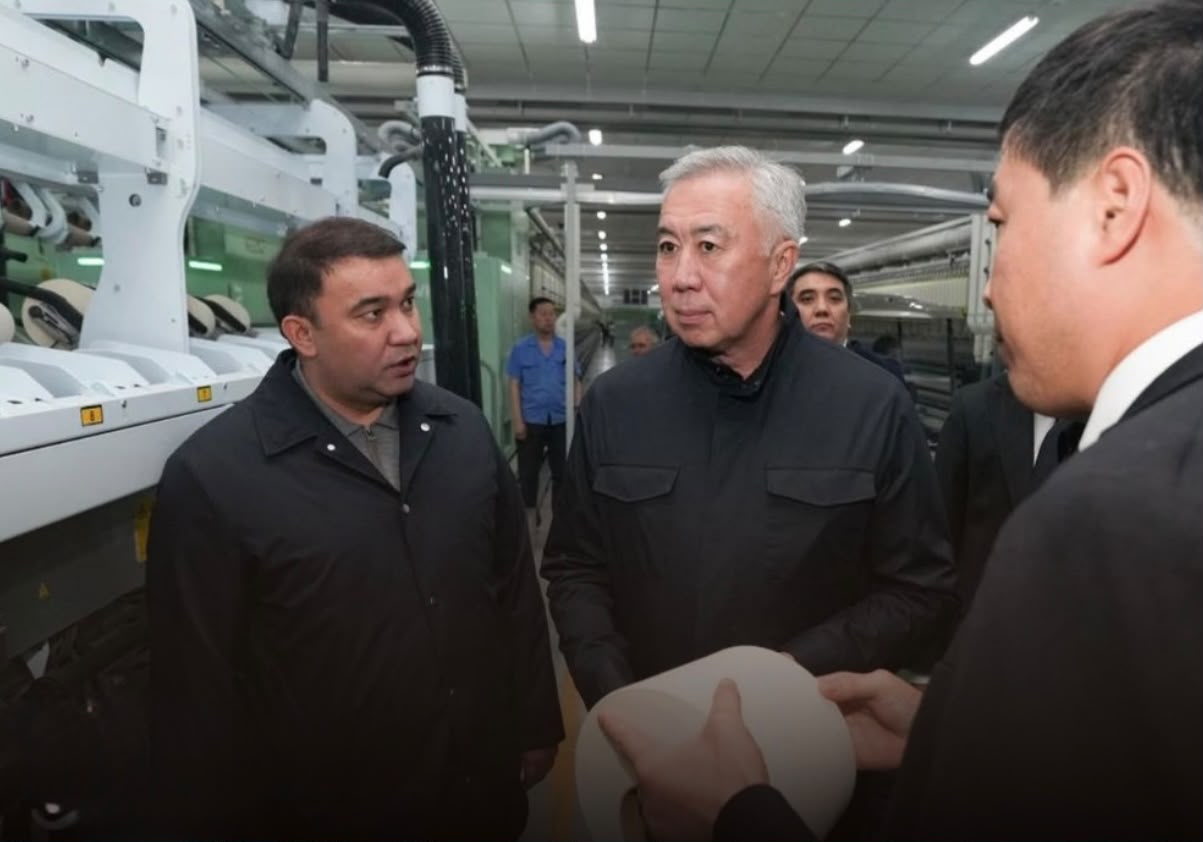
During a working visit to the Turkistan Region, Deputy Prime Minister and Minister of National Economy Serik Zhumangarin familiarized himself with the operations of industrial and agricultural enterprises in the region.
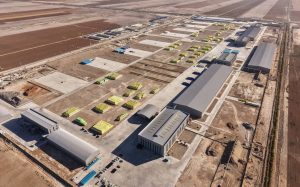
In the city of Shardara, accompanied by Regional Governor Nuralkhan Kusherov, he visited a small industrial park. Six buildings have already been commissioned at the production site, which covers a total area of one hectare, while five more are currently under construction.
The industrial park hosts enterprises manufacturing furniture, modular houses, thermal insulation panels, window frames and construction materials. The facilities are provided with gas, electricity, water supply, sewage systems and access roads.
The Deputy Prime Minister also visited the industrial subzone of the TURAN Special Economic Zone (SEZ) in the city of Turkistan. A total of 16 investment projects are being implemented across the 290-hectare subzone, with plans to create more than 4,000 jobs.
One of the key projects within the TURAN SEZ is the Turkestan Cotton Agro-Industrial Complex, implemented in partnership with China's Xinjiang Lihua Cotton Co. Ltd. The project is valued at KZT 146 billion and envisages the establishment of a fully integrated production cycle, from cotton cultivation to deep processing and the manufacture of finished textile products.
The complex is planned to comprise 11 enterprises. To date, eight facilities have been commissioned, including four cotton processing plants, factories producing drip irrigation tapes and PVC pipes, a spinning mill and a cottonseed processing plant.
As part of efforts to develop the raw material base using water-saving technologies, cotton was planted on an area of 52,000 hectares. The yield reached 56 centners per hectare. Between 2024 and 2026, the project created 1,200 jobs.
Further plans include the construction of a nonwoven fabric production plant, a dyeing facility and a garment factory.
At the conclusion of his working visit, Serik Zhumangarin met with farmers from the region. The meeting focused on agricultural development, government support measures and pressing challenges facing the sector.


 EN
 KK
 RUS